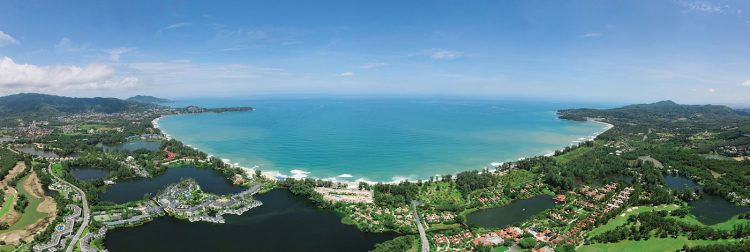
New Zealand Sports Turf Institute (NZSTI) and Golf New Zealand have launched a project to measure the environmental value

AUCKLAND — In a move to future-proof the sport against rising social and political pressure, the New Zealand Sports Turf Institute (NZSTI) and Golf New Zealand have launched a pioneering project to measure the “invisible” environmental value of the nation’s fairways.
The partnership is developing a localized Carbon Sequestration Model (CSM), a tool designed to calculate exactly how much atmospheric carbon is captured and stored within the soil, trees, and turf of New Zealand’s golf courses.
The Science of the Soil
While many associate carbon capture strictly with dense forests, the research highlights a surprising champion: the grass itself. Golf courses store atmospheric carbon as Soil Organic Carbon (SOC).
NZSTI Sports Surfaces and Equipment Manager, Tara McLeod, notes that the most intense sequestration actually happens where growth is most active.
“On a golf course where you currently have new grass growing, that grass remains young and is constantly taking carbon from the air in order to be able to grow,” McLeod explained. “Growing grass is potentially sequestering more carbon than an established forest.”
This challenges the common misconception that only mature, “big bush” areas provide environmental benefits. According to McLeod, once trees reach full size, their sequestration rates decline significantly. In contrast, the managed turf on fairways and greens—constantly renewed through maintenance—acts as a consistent carbon sink.
Golf vs. Housing: The Battle for Green Space
The project arrives at a critical time as golf courses face increasing scrutiny from developers and policymakers looking to solve New Zealand’s housing crisis. The CSM aims to provide data-driven evidence to defend the retention of green spaces.
“Without green space, without green plants… you don’t have oxygen,” says McLeod. “The more replacement of that green space with housing development or industrial development… the more carbon that’s emitted and then the greater damage to the environment.”
The model specifically seeks to quantify what is lost when a course is paved over. “What we really wanted to prove was that if we took the golf course away and built housing on it, how much carbon sequestration would we lose from that same land area?”
The Road to 2030
The initiative aligns with The R&A’s “Golf Course 2030”, a global effort to address climate change and resource constraints. However, the NZSTI insisted on a bespoke model to reflect New Zealand’s unique ecosystem and soil profiles.
Key Objectives of the CSM:
- Establish Baseline Data: Measure current SOC levels on established courses.
- Predictive Analysis: Determine sequestration changes over 5, 10, and 20-year periods.
- Management Balance: Help clubs offset emissions from fossil-fuel mowers and fertilizers against the carbon they sequester.
Testing and Implementation
Research is already underway at Maungakiekie Golf Club, where two holes have been assessed, with four more slated for testing this year. The tool will undergo a five-year refinement period to validate its findings.
Once finalized, the CSM will be available via Golf NZ and NZSTI. For individual clubs, the data will serve as a powerful public relations tool, allowing them to demonstrate the tangible environmental value of their land beyond the scorecard.
To achieve a “net-positive” status, McLeod suggests clubs can already take action by:
- Transitioning to electric machinery.
- Implementing nutrient management plans to reduce fertilizer use.
- Reducing the total area of intensively managed turf in favor of native plantings.
SOURCEL Golf New Zealand