INTERVIEW: Gary Lisbon – From Chartered Accountant to Golf Photographer
BY Mike Orloff
If you follow global golf course design, destination travel, or high-end visual storytelling, Gary Lisbon needs no introduction. From trading in his career as a chartered accountant nearly three decades ago to establishing himself as one of the most prolific golf course photographers in the world – capturing over 730 courses across 37 countries – Gary has played a pivotal role in showcasing the beauty of our game.
Today, we’re diving deeper into his journey, the evolution of course architecture, the post-COVID boom in golf travel, and his brand-new book celebrating the legendary Melbourne Sandbelt.
Mike Orloff (MO): Gary, I’ve been a massive fan of your work for a long time, and I have to admit, I get a serious case of FOMO watching where you travel and what you capture. Before we jump into the details, would you give our audience a bit of your background and how you built your career?
Gary Lisbon (GL): Thanks so much for having me on, Mike! It really is a pleasure. My path into this industry was definitely non-traditional. Roughly 29 years ago, I was a chartered accountant working for a major corporate firm. I realised pretty quickly that standard accounting wasn’t my passion, and I started searching for a way to turn my love for golf into a career.
I got my start working with Ian Baker-Finch at his Pure Golf Academy for a couple of years. After that, my wife Maureen and I decided to venture out on our own. We initially built a business importing golf giftware out of the US to sell into corporate events. Over time, that morphed into a broader service business where we manage corporate and charity golf days, which we still run today under our Golf Select banner.
From there, we added a dedicated travel arm called Great Golf Escapes, organising bespoke golf holidays for inbound visitors as well as Australians heading overseas. The third pillar of the business is Gary Lisbon Golf Photography. To date, I’ve photographed around 730 golf courses across 37 countries. It’s been an incredible journey, though I still have a deep love for our own backyard, particularly the Melbourne Sandbelt.
MO: That’s quite the footprint! Let’s focus on the photography side first. How exactly did you transition from running corporate golf days to picking up a camera professionally, and what was your first real assignment?
GL: Living right in the middle of the Sandbelt, we were regularly running events at world-class venues like Kingston Heath and Royal Melbourne. I picked up a simple digital camera just to capture some casual photos of the guests and the event setups. But then I started taking shots of the courses themselves. The venues saw the images, thought they looked great, and started asking to use them. That’s when I began quietly thinking of myself as a photographer, though it wasn’t until I had official business cards printed that I truly felt like one!
My very first proper commercial course shoot was up at Paradise Palms in tropical North Queensland – which, sadly, is no longer with us.
Word spread from there as a few key clubs put their trust in my images. The real turning point on a global scale happened about seven years ago with the explosion of social media, particularly Instagram. Building a significant following on Instagram exposed my work to an international audience, taking me from an Australian golf photographer to someone being commissioned worldwide. COVID further accelerated that online interest, leading to trips like a recent 13-week journey through Europe where we visited 59 courses and were formally commissioned to shoot 18 of them.
MO: From a commercial standpoint, who recognised the value of premium photography early on, and how has the market expanded across different tiers of facilities?
GL: High-end, luxury facilities have always understood the value proposition. They are selling a premium lifestyle and experience, so they know they must present their product flawlessly across print media, online platforms, and promotional brochures. If a club presents terrible imagery, it’s simply not going to pull in visitors.
Over time, mid-tier and municipal clubs have increasingly realized that they need quality imagery to compete, though their budgets vary. Some try local, low-cost alternatives, but the landscape has shifted dramatically over the last seven or eight years due to drone technology. Suddenly, anyone can buy a $400 drone, fly it into the air, and call themselves a golf course photographer. The market is much noisier now. However, establishing credibility over 10 to 15 years by consistently delivering for top-tier, world-recognized clubs is what separates professional, architectural photography from standard aerial snaps.
MO: Do course photos have a specific shelf life? How often should a club consider re-investing in a comprehensive photo shoot?
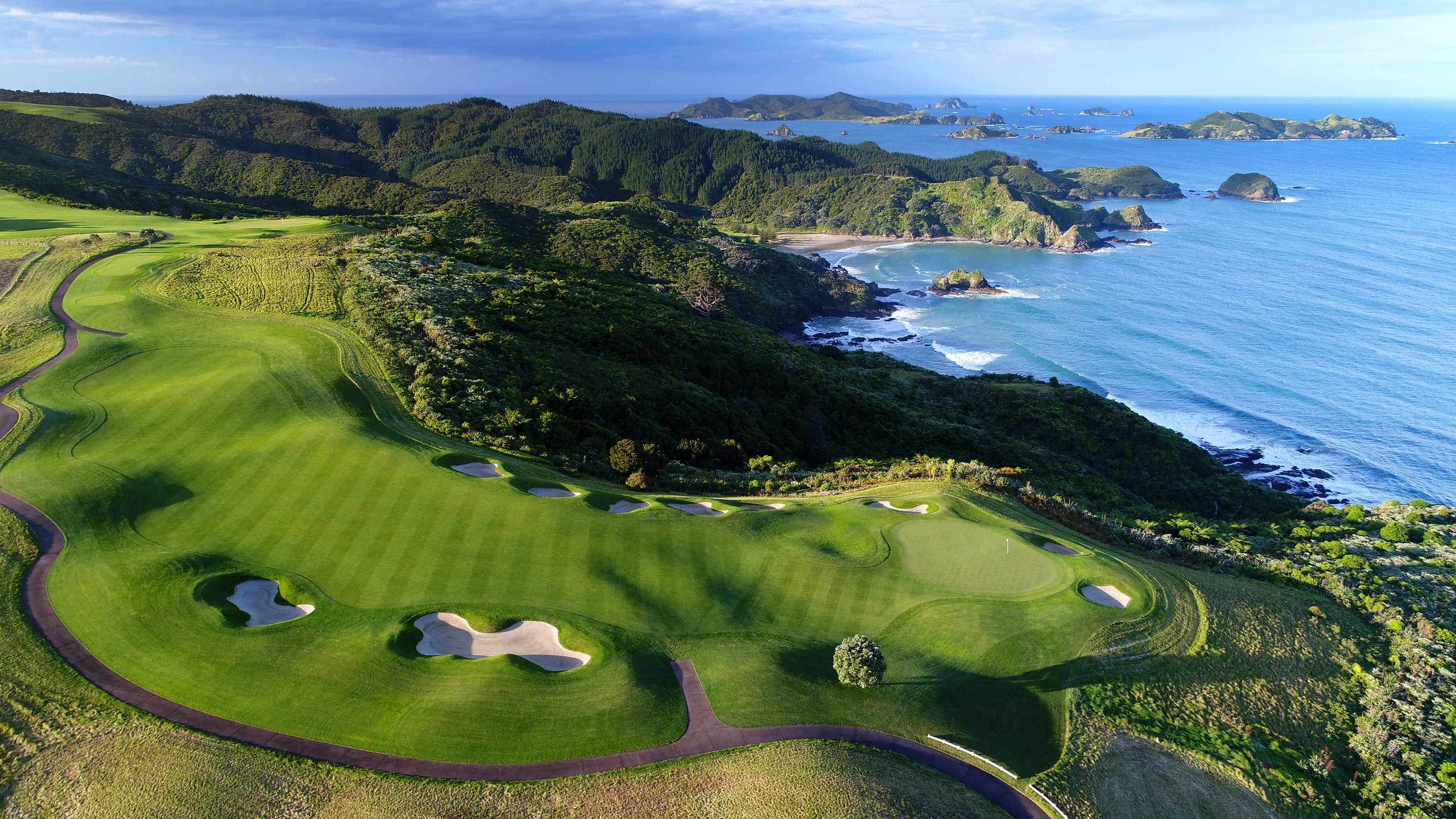
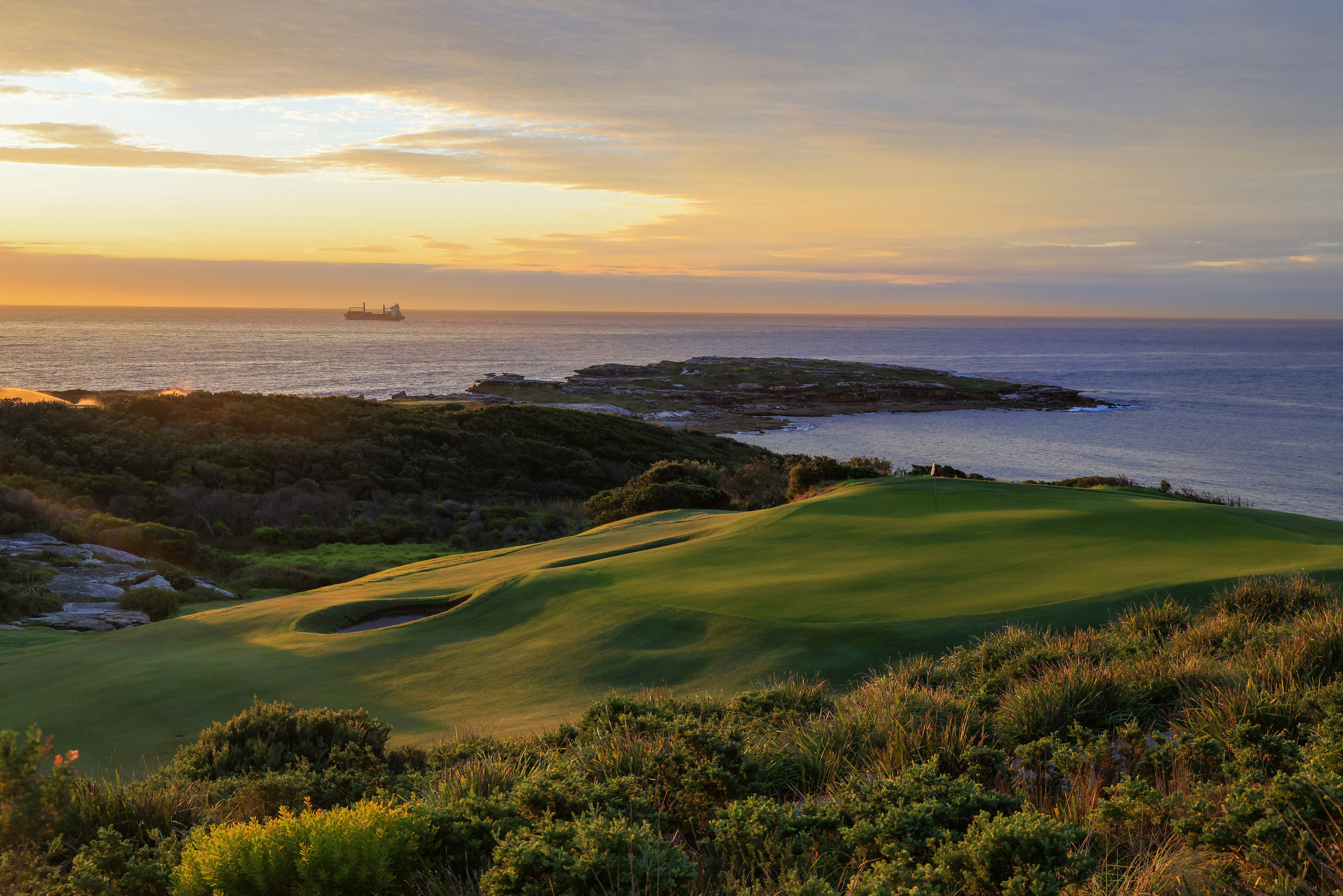
GL: It’s a mix of factors. Golf courses are living, breathing landscapes that constantly mature, change, and evolve. Historical photos are vital archives for clubs. When you walk or work on a course every single day, you don’t always notice gradual tree encroachment, shifting shade patterns, or subtle green shrinkage. Looking back at photos from a decade prior gives boards and superintendents clear visual evidence of how exposed a green site originally was or how much a sightline has closed.
Because quality photography is a financial investment, the refresh cycle varies based on club budgets. Some facilities bring me back annually, while others operate on a 5- to 10-year cycle. We’ve also seen a massive influx of clubs celebrating their centenary or 125-year milestones recently. That milestone usually triggers a desire to document their history, capture current course conditions, and publish legacy books – much like Kingston Heath did recently using a mix of my modern imagery overlaid with historic tournament photos.
MO: We’re seeing a massive wave of course redevelopments right now, particularly down on the Sandbelt. How is that architectural renaissance impacting your work?
GL: It has opened up incredible opportunities. Pretty much the entire Sandbelt has undergone a transformation recently. Huntingdale, Yarra Yarra, Commonwealth, Peninsula Kingswood, Metropolitan – all have been reimagined with a great end result. Interstate clubs including Royal Sydney and New South Wales have also been reinvented with modern architectural master plans.
What’s great is that today’s leading architects act as true historians. Instead of imposing personal quirks on a layout, they analyse early 20th-century aerial photos – often taken from early aircraft – to restore original bunkering and fairway contours that were lost over decades of ill-informed committee decisions. At many of the Sandbelt courses, historical photography has been instrumental in bringing back original bunker designs. Capturing these restored layouts as they mature creates an incredible visual record for future generations.
MO: What stands out as the ultimate crown achievement of your photography portfolio?
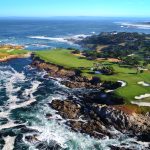
GL: Asking for a single favourite photo is like asking me to choose my favourite child! It depends entirely on the moment. I’ve had magical shoots at places like Lofoten Links up in the Arctic Circle of Norway, Ballybunion in Ireland, Cypress Point in California, and, closer to home, Seven Mile Beach in Tasmania.
Landscape and golf photography operate on tight windows of time. Sometimes you deal with days of wall-to-wall cloud, wind, and rain, and you’re fighting just to find a brief opening. Then, suddenly, the storm breaks and the light pops through for a short period, allowing you to capture something extraordinary. Other times, you get blessed with perfect weather throughout the shoot. You just have to roll with the punches, stay patient, and let the light dictate the story.
MO: That window of light in golf photography is famously narrow. What are the actual operating conditions during a shoot?
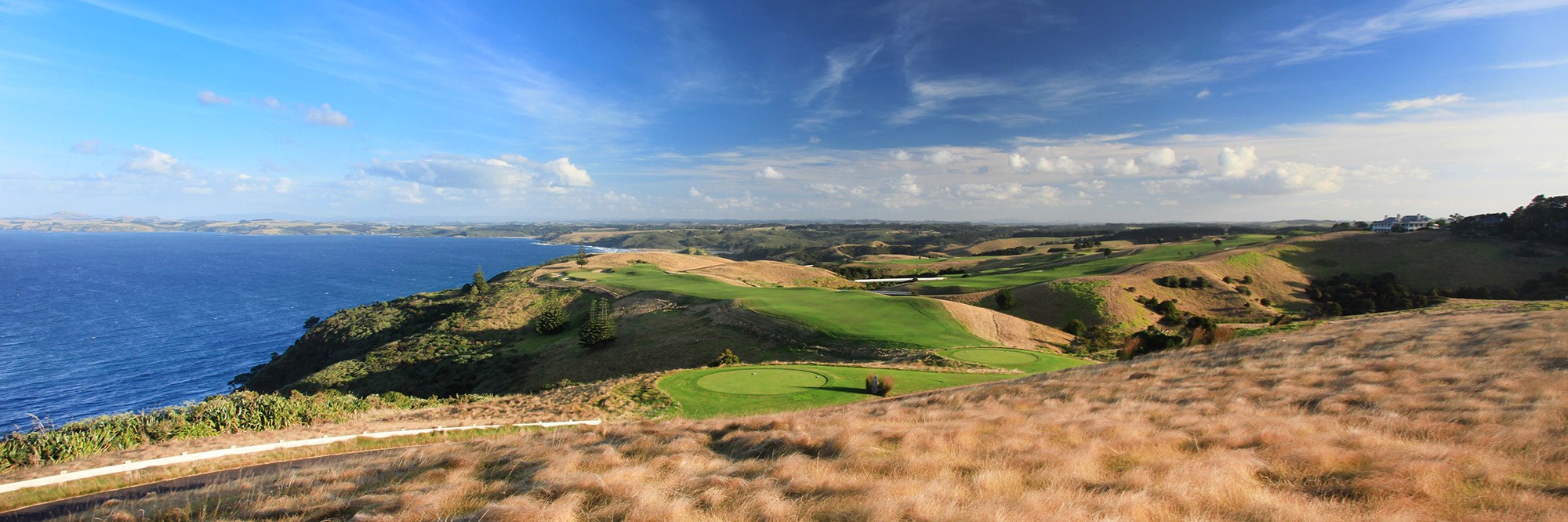
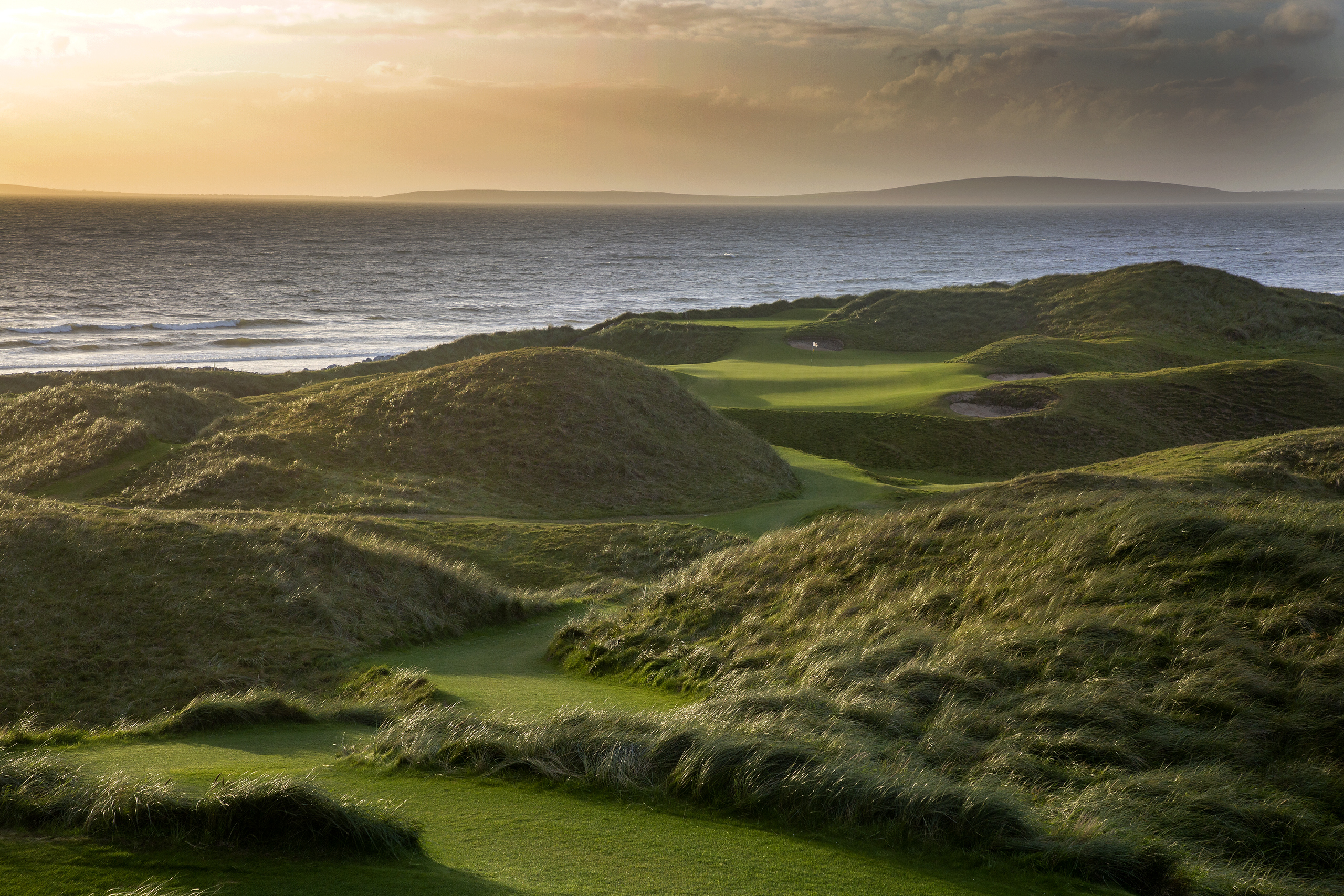
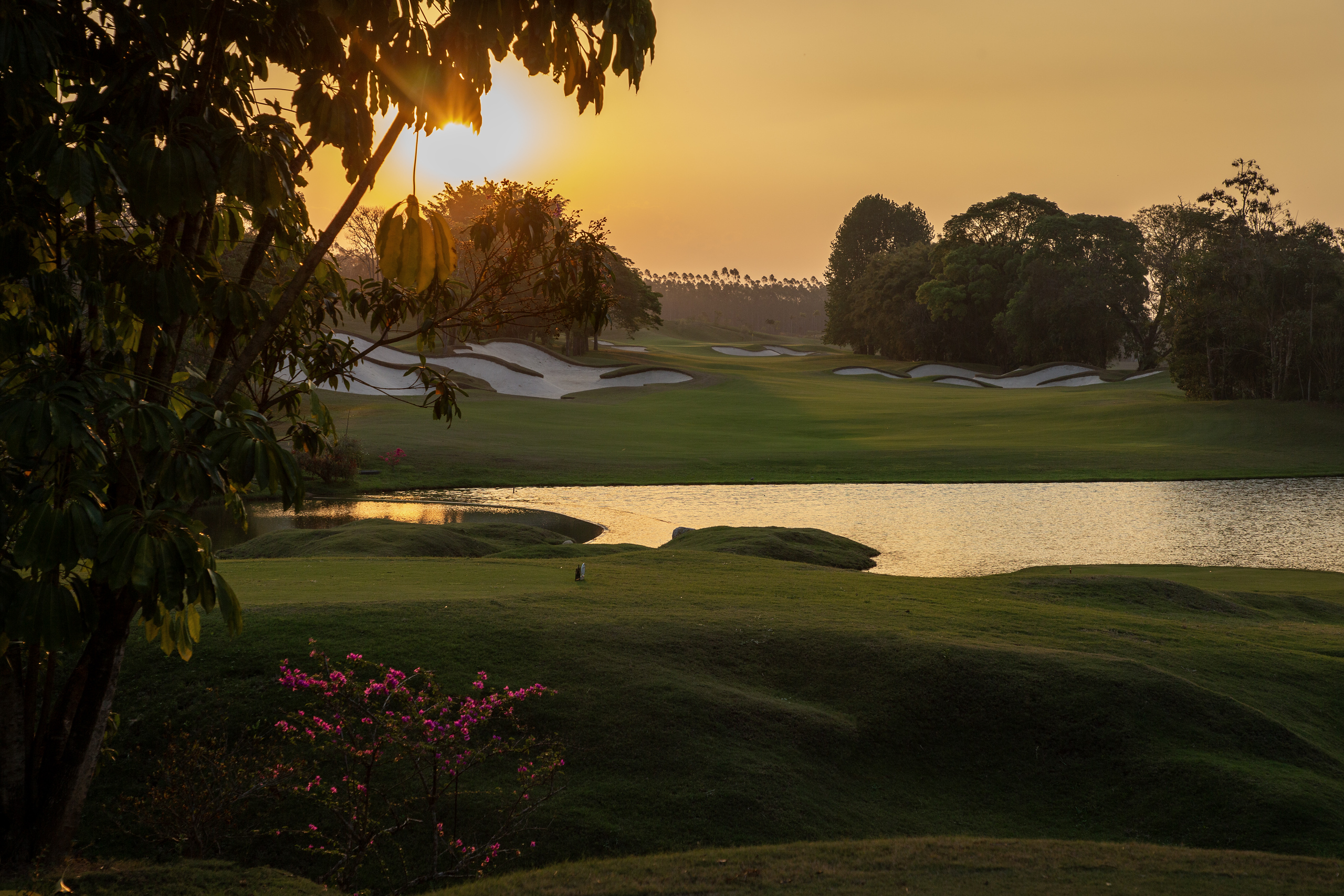
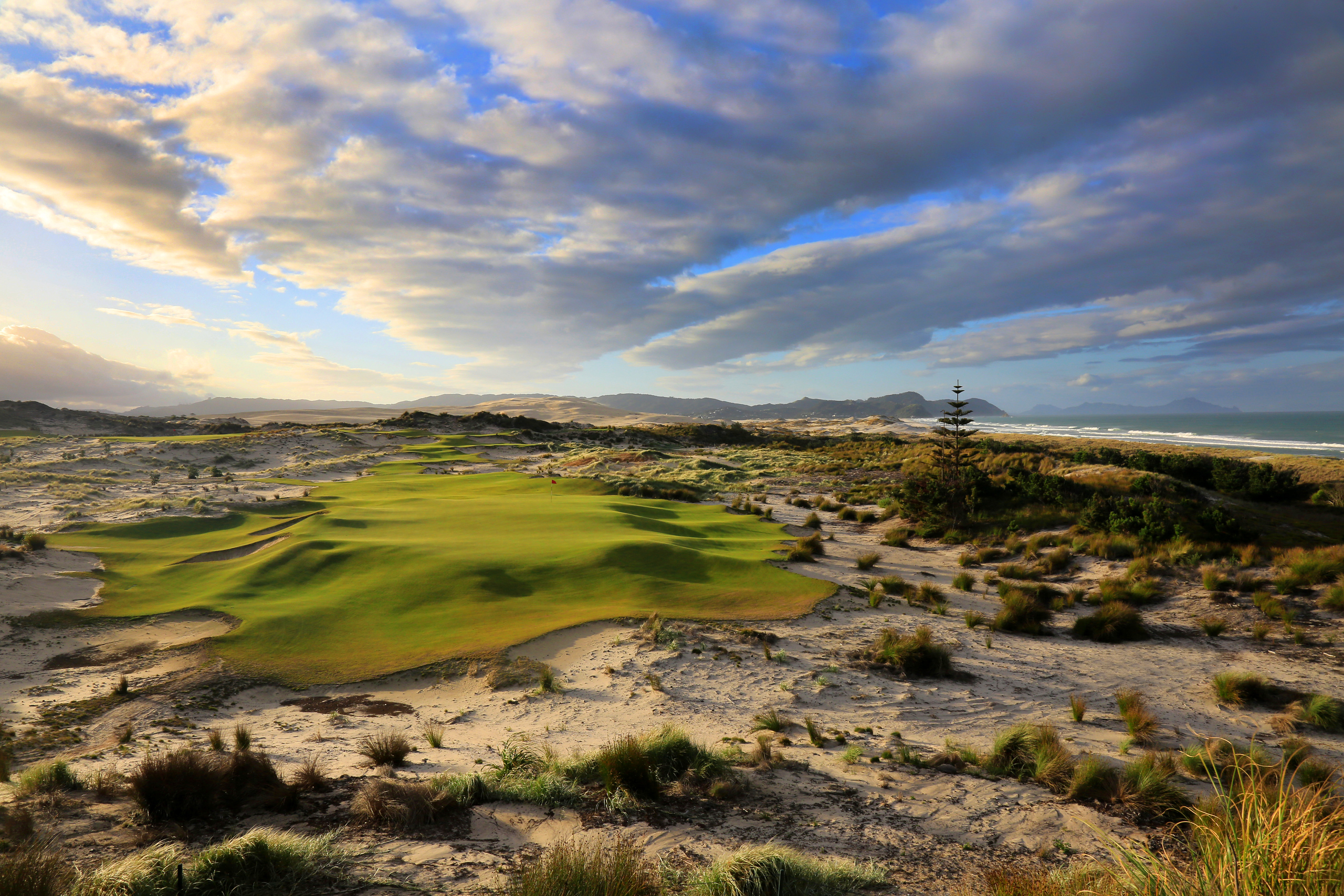
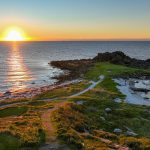
GL: Our window to shoot is incredibly tight. We rely almost exclusively on what we call the “golden hour” – that brief period right after sunrise and just before sunset. Depending on your location and latitude, that optimal window might only last 30 to 45 minutes.
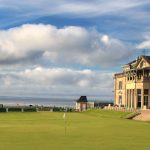
You simply cannot take compelling golf course photos at midday. When the sun is directly overhead, it casts no shadows, which flattens out the landscape and strips away texture. When the sun is low on the horizon, it casts long shadows that accentuate every dip, hollow, ripple, and contour – which is critical when shooting flatter, links-style terrain in places like the UK or Ireland. During that golden window, you are running around frantically trying to capture as many angles as possible. Drones have been a game-changer here, allowing me to cover vast distances and switch perspectives in seconds.
MO: What gear do you trust to pull off these high-pressure shoots?
GL: My core philosophy is mobility. I insist on keeping my entire setup compact enough to fit into carry-on luggage, because checking fragile camera gear into baggage holds is a recipe for disaster.
My ground setup is a mirrorless Canon R5 Mark II, paired primarily with a 24-105mm lens, which is my absolute workhorse. For aerial photography, I fly a DJI Mavic 4 Pro. It’s surprisingly compact yet packs three built-in cameras that shoot exceptional stills and video, with great battery life. Drone technology has come a long way—the obstacle sensors mean they are much harder to crash into trees than the early models were!
Though equipment can still surprise you. While shooting Mayakoba in Mexico recently, the drone suffered a sudden mid-flight system failure and plunged straight into thick mangroves, completely unrecoverable! DJI accepted responsibility and sent a replacement, but it was delivered to my home in Australia while I was stranded in Mexico. We managed to source a backup unit locally to finish the job, but it’s a good reminder to always carry backup gear and prepare for bird attacks, ocean falls, or hardware crashes.
MO: Let’s shift to the travel side of your business. Golf travel is a massive economic engine, yet it’s rarely detailed in standard industry coverage. How has that sector transformed over your career?
GL: Technology and the internet completely democratised travel. Decades ago, a golfer had to sit down with a local travel agent who would manually book flights and hotel packages. Today, anyone can jump online and build their own basic itinerary.
However, golf travel – especially high-end golf travel—remains highly specialized. Gaining access to private, exclusive courses and piecing together a logical, non-frenetic playing schedule around tight tee-sheet availability is a complex puzzle. That’s where our travel business, Great Golf Escapes, adds value.
While COVID obviously grounded our travel division for two years, the post-pandemic rebound was unbelievable. There was massive pent-up demand. Golfers were desperate to tick off bucket-list journeys, whether traveling to destination hubs like Barnbougle in Tasmania or taking multi-leg flights to play remote courses like Lofoten Links in Norway. The journey to those remote places becomes part of the adventure.
MO: Looking globally, where are the biggest destination hotspots unlocking right now?
GL: Southeast Asia has seen incredible momentum. Thailand was the pioneer, but Vietnam has exploded over the last decade, particularly around Da Nang and Hoi An. New Zealand remains a powerhouse in our region, adding new world-class developments like Te Arai (North and South) north of Auckland, Hogan’s Gully in Queenstown, Glendhu Bay, and updates to The Hills to complement established giants like Kauri Cliffs and Cape Kidnappers. In the UK and Ireland, projects like St. Patrick’s Links at Rosapenna have created a huge surge in demand.
The primary challenge today is rising costs. Playing marquee, world-ranked courses has become extremely expensive. Part of our job as tour operators is balancing client aspirations. If a client insists on playing only top 100 bucket-list courses, the price point can be very high. But if we blend two or three headline courses with hidden regional gems, we can craft a memorable, cost-effective itinerary.
MO: What are some of those standout hidden gems that golfers often overlook?
GL: Arrowtown in New Zealand is a classic example – a unique, charming course tucked right next to Queenstown. Queenstown Golf Club at Kelvin Heights sits on a dramatic peninsula with incredible mountain vistas, especially now that they’ve cleared away overgrown trees.
In Australia, the upcoming opening of The Cliffs on Kangaroo Island in South Australia – designed by Darius Oliver – is going to capture global attention. It features stunning cliff-edge holes before sweeping inland. When you combine that with the quality of Adelaide’s core courses like Royal Adelaide, Kooyonga, Grange, and Glenelg, it forms a fantastic regional cluster.
Down in Victoria, coastal tracks like Flinders – with legendary hole names like the Coffin Hole – as well as Barwon Heads and Port Fairy offer incredible, authentic golf experiences without the massive price tag. Port Fairy offers pure, ocean-side links golf with unbelievable local hospitality.
MO: Let’s dive into your publishing work. You’ve produced several major books, including Great Golf Courses of the World and your latest project focusing on Victoria. What was the catalyst for the new book?
GL: My initial self-published books were part of a series called Great Golf Down Under, followed by my large coffee-table book, Great Golf Courses of the World, which featured 100 courses across 20 countries.
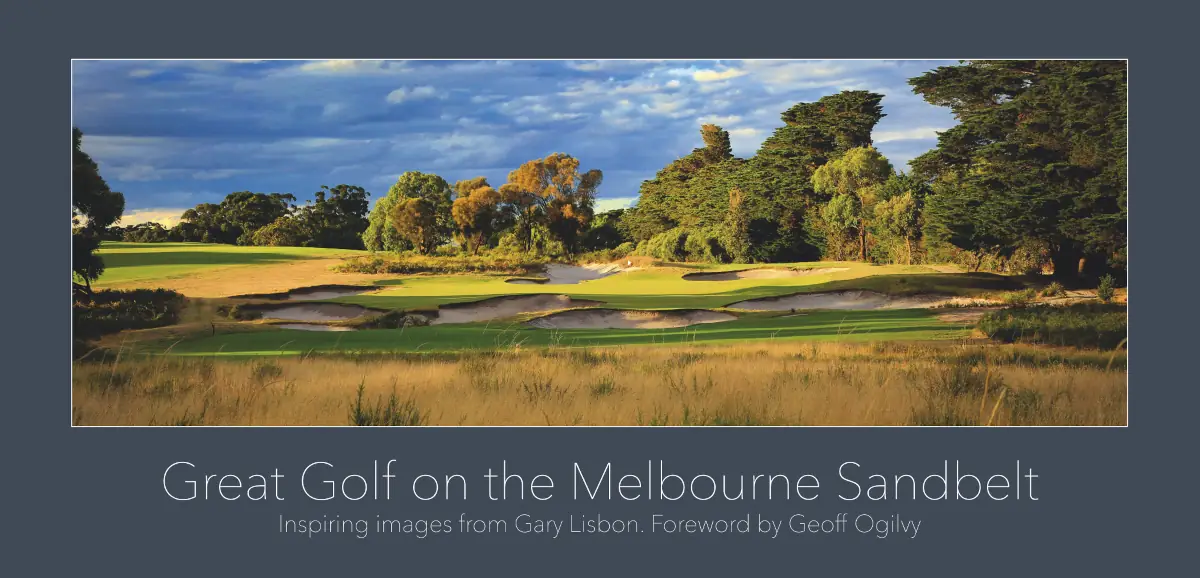
Earlier this year, I realized it had been 25 years since a dedicated photographic book had been produced on the Melbourne Sandbelt – the last major one being David Scaletti and Paul Daley’s work in 2001. Given the radical course redesigns and architectural changes that have taken place across the region recently, I felt it was time to capture what the Sandbelt looks like today.
That led to Great Golf on the Melbourne Sandbelt. About 98% of the photos were taken by me this year. To give it a rich local feel, we commissioned representatives from each club to write an essay on their club’s culture and history. We brought in local Sandbelt member and artist Dan Hille to draw custom renderings of every clubhouse and course map and used Melbourne-supplied paper from Spicers to keep the entire production local. My eldest daughter Al is responsible for the wonderful layout and design.


MO: You also introduced a fun, interactive social campaign around the launch called the Sandbelt Composite Course. How does that work?
GL: We posed a question to the golf community: what if you built an 18-hole dream composite course using the eight Sandbelt clubs (with their 10 courses), but every hole selected had to keep its original routing number? So your 1st hole must be a real 1st hole from the Sandbelt, your 2nd hole must be a 2nd hole, all the way to the 18th.
My colleague Janet developed a dedicated website—sandbeltcomposite.com—where golfers can select their favorite holes from all 180 available options and cast their votes. It sparked fantastic debate online! Unsurprisingly, Royal Melbourne features heavily, but the single most dominant winner was the 5th hole on Royal Melbourne’s West Course—a breathtaking short par-3 playing downhill through a valley into a heavily bunkered green—which captured over 79% of the vote for the 5th hole slot!
MO: Stepping back to look at the broader industry, what macro trends or challenges are you watching closely?
GL: On the positive side, golf has experienced a massive post-COVID boom, bringing new demographics and higher participation to clubs. However, that brings operational challenges around tee-sheet availability and overcrowding.
My biggest concern is equipment technology rendering classic course architecture obsolete. Modern balls and drivers allow players to fly hazards that architects intentionally designed to force strategic decisions. When technology lets players overpower a layout, it dilutes the strategic genius of classic courses.
I’m also passionate about shifting the perception that “green is good”. Watching the US Masters every April conditions golfers to expect neon-green, lush turf year-round. But maintaining bright green turf requires massive water usage, chemical inputs, and labor costs, driving up membership fees. I much prefer firm, golden, browning conditions – especially on links courses – where the ball rolls and you can play creative, ground-game shots into the greens.
Finally, slow play on tour is a terrible influence. Young golfers watch tour pros take 45 seconds hovering over a ball and replicate it, whereas they should watch guys like Ryan Fox who walk up, hit the ball, and keep moving!
MO: How is your own game holding up amidst all your travel and busy schedule?
GL: I am currently playing off a very frustrating 8.2! My driving is erratic and my putting is inconsistent, but my mid-iron play is okay. I used to hover around a 5 or 6, so an 8 feels more like a 10 right now!
Mike Orloff: I hear you!
To wrap up, what core advice would you give to the next generation of aspiring golf course photographers looking to break into the industry?
GL: First, don’t be afraid to take thousands of photos and experiment constantly. Study the work of photographers you admire to understand how they frame a line or use perspective.
Second, respect the light. Never go out at midday expecting to capture a world-class landscape image; commit to the early mornings and late afternoons when the shadows bring the terrain to life.
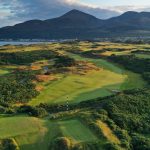
Lastly, if you fly a drone, resist the urge to fly too high! Everyone buys a drone, flies it up to 100 meters, and thinks high altitude looks impressive. In reality, flying that high flattens out all the subtle undulations and ripples of the course. Keep your drone low – around 25 to 30 meters off the ground. That height captures the scale, depth, and true movement of the architecture while keeping the viewer immersed in the landscape.
Digital camera gear makes learning much easier than it was 30 years ago, so take advantage of the tech, practice constantly, and enjoy the journey!
MO: That is gold-standard advice, Gary. Thank you so much for your time today, and congratulations on the launch of the new Sandbelt book! I look forward to a read when I receive it.
GL: Thanks for having me, Mike! It’s been an absolute pleasure catching up.
Release Details and Background
| BOOK SPECIFICATION | DETAILS |
| Format | Large-format hardcover |
| Length | 112 pages |
| Imagery | 220 images |
| Price | AUD$105 (Free delivery within Australia) |
| Availability | Delivery from 27 August 2026 at www.greatgolfbooks.com |
| Production | Produced and printed in Melbourne |