NZ: Poverty Bay GC irrigates with recycled water used to wash salad greens
LeaderBrand has teed up a novel method to help Poverty Bay Golf Club irrigate its course by recycling water used to wash salad greens.
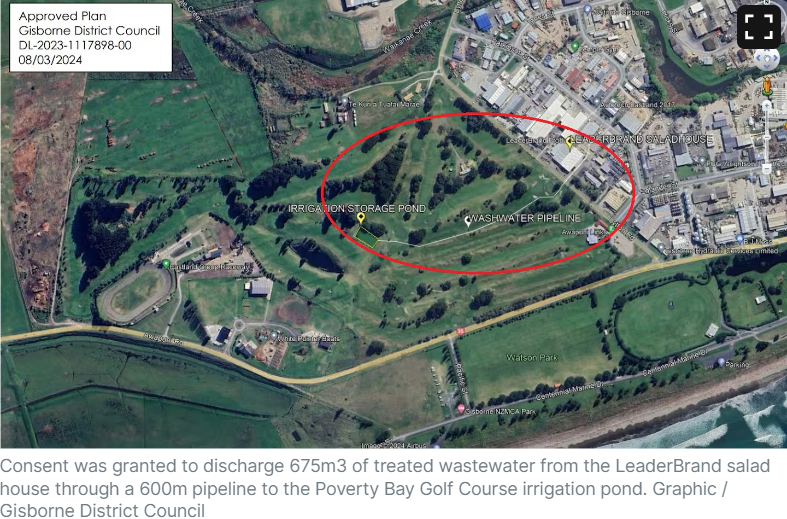
A 600-metre water pipeline runs from LeaderBrand’s Gisborne salad house, under Lytton Rd and along the length of the ninth hole to a lined irrigation pond.
It helps recycle wash water that would otherwise go to the municipal wastewater treatment system, making more irrigation water available for the course and potentially reducing the pressure on the local aquifer.
Gisborne District Council recently granted resource consent for LeaderBrand to discharge 675cu m of treated wash water to the pond used to irrigate about 13.5ha of tees, greens and fairways.
The wash water was deemed high enough quality to irrigate the course and after trials over the last few months, the pipeline has been fully operational since September 19.
Poverty Bay Golf Club greenkeeper Rowan Clark said the golf course previously used water from the Te Hapara Sands aquifer.
“Reductions in the allocation of water from the aquifer have meant that the golf course was facing a water shortfall as it sought to renew its resource consent in 2022,” Clark said.
“The golf course is situated on light soils and our region can experience dry periods, so a reliable supply of irrigation water is critical to keeping our greens, tees and fairways in good playing condition. This will be an increasing concern with dry weather events occurring more frequently in this region.”
LeaderBrand chief executive Richard McPhail said the business, as a significant user of water for farm irrigation and processing, was conscious of the need for the region to make the most of its water resources.
“For the last few years, we have been looking at new ways we could reuse our processed water from our salad house. Over the summer we use the wash water to transport our squash from the fields into our packhouse.
“This has enabled us to reduce our site’s water use during the squash season, and another bonus is that there is sufficient residual sanitiser to allow us to stop using chlorine in the squash packhouse as well,” McPhail said.