NZ: Myrtle rust suspected at Mount Maunganui Golf Club
Mount Maunganui Golf Club is working with a local hapū to investigate nearly 400 pōhutukawa trees on its golf course after small signs of myrtle rust were suspected.
About 800 trees are planted on the privately owned 18-hole golf course, half of which are pōhutukawa. Myrtle rust is a wind-borne fungal disease that can infect New Zealand taonga trees, including pōhutukawa, mānuka, kānuka, rātā, and ramarama.
The golf club’s general manager Michael Williams says they first approached Ngai Tukairangi – a hapū of Ngai Te Rangi iwi – about removing three pōhutukawa from the seventh hole, as part of a safety plan to relocate the fairway further away from the boundary line and neighbouring homes.
A strategic plan by the club’s course architect and New Zealand professional golfer Phil Tataurangi recommended three pōhutukawa planted in front of one of the tee blocks had to be removed as an initial step in order to move the fairway.
But after engaging with an environmental consultant a few months ago, it was found some of the other pōhutukawa trees were showing potential signs of myrtle rust.
Through these discussions, the club formed a relationship with the hapū, which has given the club its blessing to fell three pōhutukawa sooner rather than later, as these younger trees – no more than 50-years-old – were more susceptible to myrtle rust.
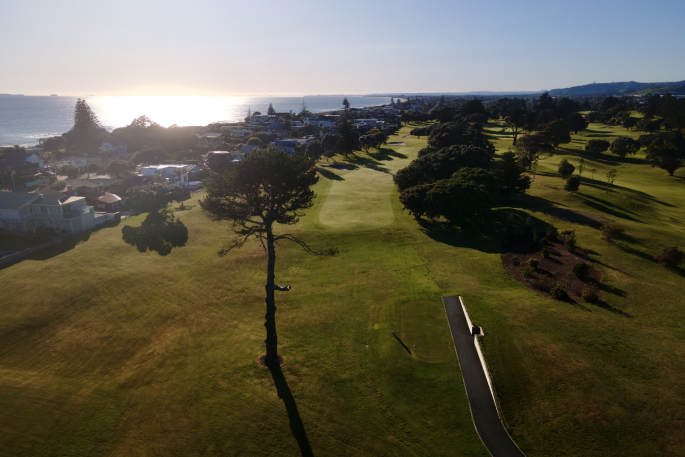
Mount Golf Club seventh hole. Photo: Supplied.
It is intended the club will plant about 20,000 other native plants, shrubs, and trees on the golf course. Some smaller trees will be saved and transplanted to realign some holes away from the boundaries.
Michael says the club has formed a close relationship with Ngai Tukairangi and Tauranga Moana Biosecurity Council Māori Caucus to be able to monitor the situation.
“Having these close relationships means the club identifies myrtle rust as a key issue and we are trying to get ahead of that.”
Michael says the club also recognises pōhutukawa is a treasured taonga, which is why it is important to have the hapū’s blessing to fell the three trees.