A Good Walk Not Spoiled – My Visit To The New Royal Sydney Golf Course
By Mike Orloff
On a recent trip to Sydney, I was fortunate enough to get a personal guided tour of Royal Sydney Golf Club and the new Gil Hanse layout in Sydney. This industry is full of amazing people who are genuinely proud of their work and eager to share it. Lucky for me!
Although the course is currently only open for limited member play, the second-best thing for me was getting a full walking tour with Superintendent Adam Marchant, with CEO Des Mulcahy joining us toward the end of the tour.
The morning was made even better when I got to catch up with fellow PGA Member Nick Robb, the new Director of Golf, who recently moved over from Cromer Golf Club. It’s a great reminder that in this line of work, it’s always great to get out from behind the screen and put a proper face to a name. We are a hospitality business, so face-to-face is always the best.
The Bay Course had only been open since March 2025, and play is carefully managed. Mondays are still closed, and only 600 rounds are allowed per week across the nearly 2,200-member membership.
That might sound restrictive, but there’s a good reason. The turf needs to settle. It’s winter in Sydney, and Adam and his team are carefully nurturing the course into full maturity. As anyone in the industry knows, patience pays off.
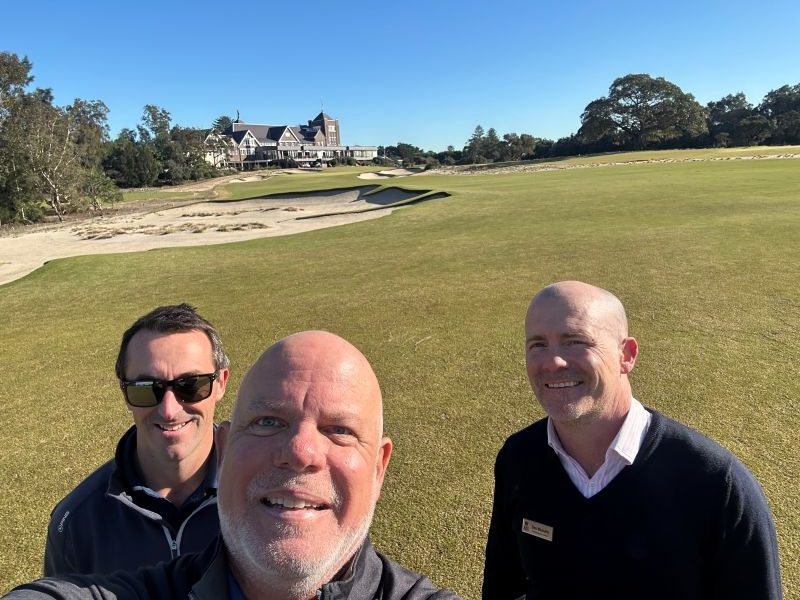
(L/R- Adam Marchant, Mike Orloff, Des Mulcahy)
Half a Million New Reasons to Visit
Walking down the first fairway, you can immediately feel that this is not just a golf course renovation, it’s an ecological revival. Royal Sydney has already planted 250,000 new native plants and trees, with a further 250,000 still to be planted. When all is said and done, more than half a million new plants will have been added to the property.
It’s an ambitious number, and it reflects the vision laid out in the club’s 2030 Strategic Plan.
“Having had its last major redesign in 1922, our old Championship Course was approaching 100 years of service,” Des explained as we reached him partway through the walk. “The quality was diminishing, maintenance was becoming harder, and we were facing inevitable upgrades to drainage and irrigation. This project gave us the chance to do it all, and to restore the course’s standing as one of Australia’s great layouts.”
And they didn’t just hand the job to anyone. They brought in Gil Hanse, one of the world’s most respected golf course architects, to lead the redesign.
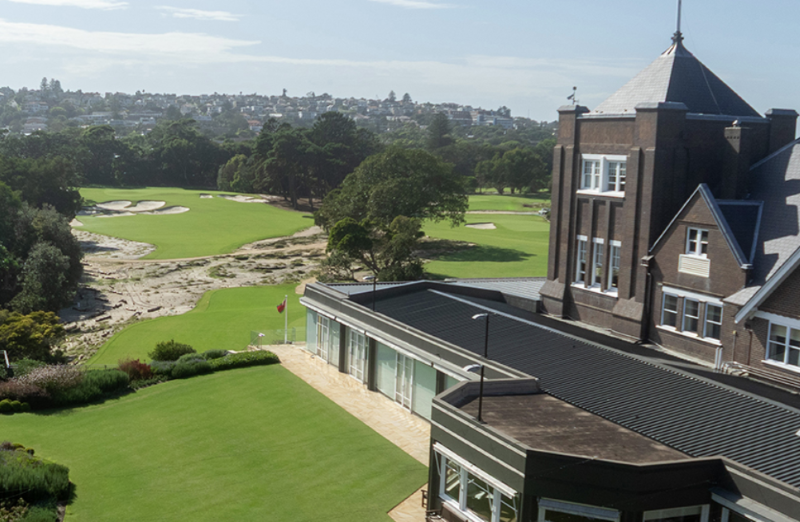
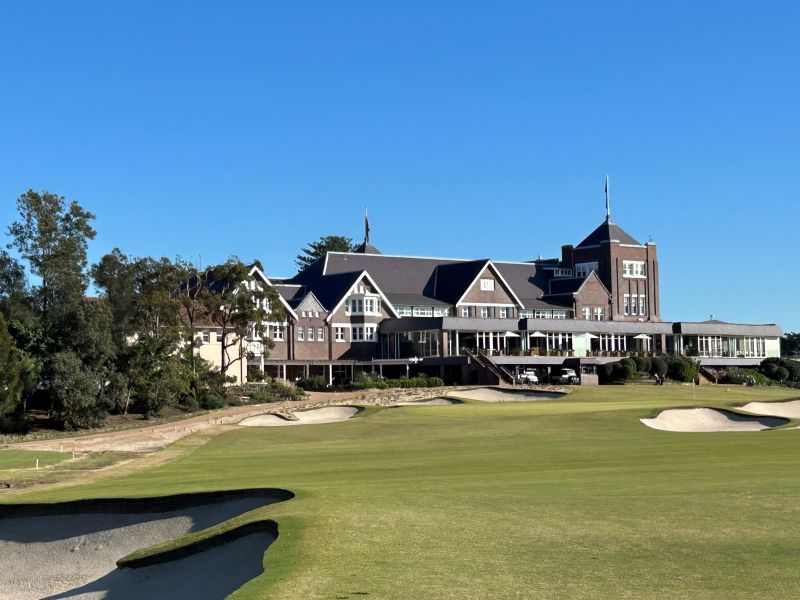
(First Hole looking from Clubhouse)
From Plan to Reality
What I found fascinating was hearing Des talk about how a course design evolves from paper to reality. “The design remained essentially as per the plan,” he said, “but there have been some variations. Gil often talks about the difference between creating a design in two dimensions and realising it in three dimensions. Once you’re standing on site, you see opportunities, open up a space here, tweak a bunker there.”
In fact, the finished course has eight more bunkers than originally planned. Yet, the total bunker square metreage hasn’t changed; they’ve just been reshaped and re-positioned to create more strategic interest.
The holes had been rerouted from their previous design to now have the best terrain possible as the new finishing holes. It’s that level of detail that struck me as we continued our walk. Nothing feels overdone. Nothing feels forced. It’s the kind of design that asks you to think your way around, and I can already imagine members debating risk-reward decisions at the bar after their round.
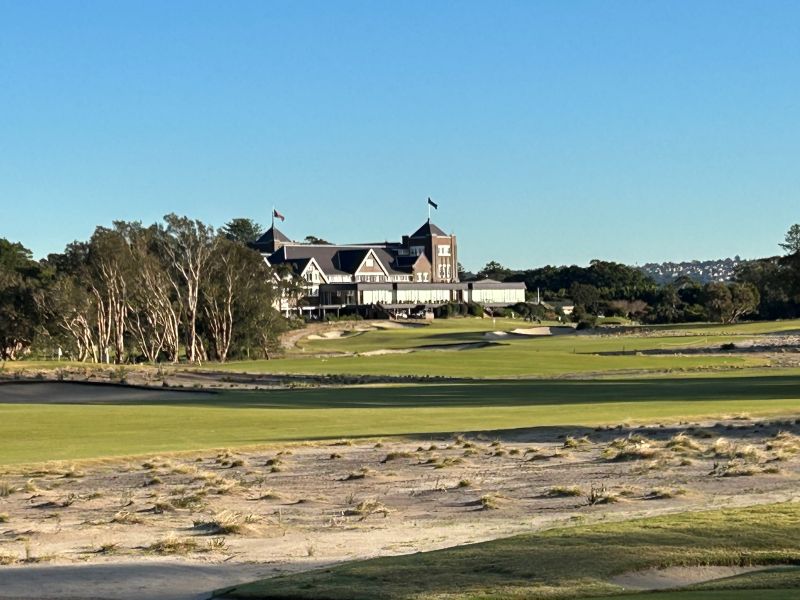
Playability Meets Sustainability
Adam Marchant lit up when he talked about how the redesign has improved playability. “We actually gave up more than 15 hectares of course land to create this heathland landscape,” he said, “but the new shapes have opened up playing corridors and created new strategies on every hole.”
Construction improvements have made a massive difference. Greens are easier to keep firm and consistent. Bunkers don’t wash out as easily after rain, and the sand no longer plugs like it used to.
And then there’s the infrastructure. The club now boasts a brand-new irrigation system fed by a dam that holds 8.3 megalitres of water – a huge leap from the old system’s five megalitres. Four bores on the property feed into the dam, guaranteeing a sustainable water supply.
For an industry increasingly focused on environmental stewardship, this is the kind of investment that pays dividends for decades.
A Landscape in Harmony
Of all the changes, what impressed me most was the transformation of the landscape. Before the renovation, Royal Sydney was more of a parkland-style course, dominated by paperbarks and mown turf.
“It wasn’t necessarily in ecological harmony with the local environment,” Adam told me. “Now we’ve got a true heathland links look – all natives that are endemic to the area. We’ve quadrupled our floral diversity, which means year-round flowering. It’s not just about aesthetics – it’s about bringing back birds, insects, and other wildlife that make the course feel alive.”
This isn’t just talk. The club removed 595 trees that were either unhealthy, unsafe, or not suited to the landscape. In their place, they’ve planted 2,187, for a net gain of nearly 1,600 trees. Combine that with the heathland planting, and Adam expects the course to save 70 million litres of water every single year.
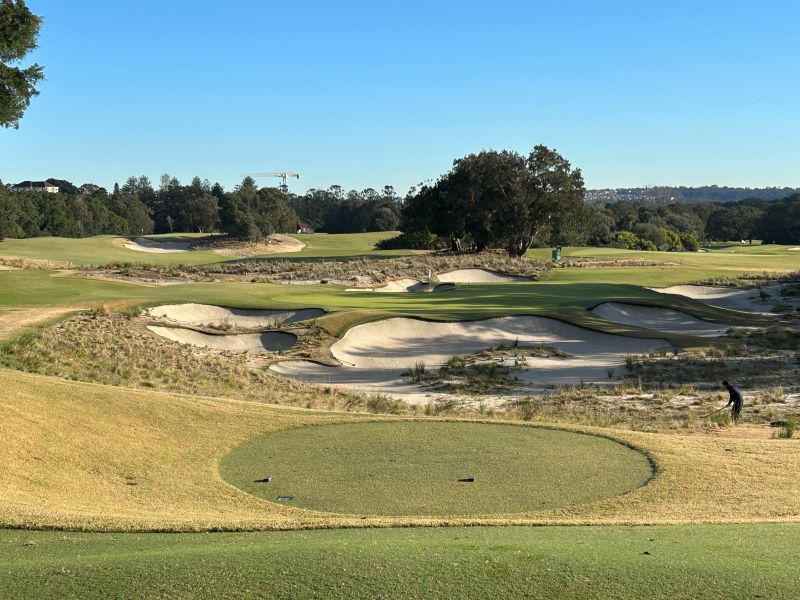
(Short Par 3 6th hole)
A Good Walk, Indeed
Royal Sydney’s new Championship Course is a reminder that golf is at its best when it works in partnership with nature, not against it. It’s a reminder that history can be honoured while still embracing change. And it’s a reminder that sometimes, a good walk really isn’t spoiled.
I can’t wait to get back with my clubs and see how it plays. But until then, I’ll remember that day as one of those moments where you’re reminded why we all love this gam, the people, the passion, and the promise of what’s to come.
For more information about the project, check out Royal Sydney’s official update.