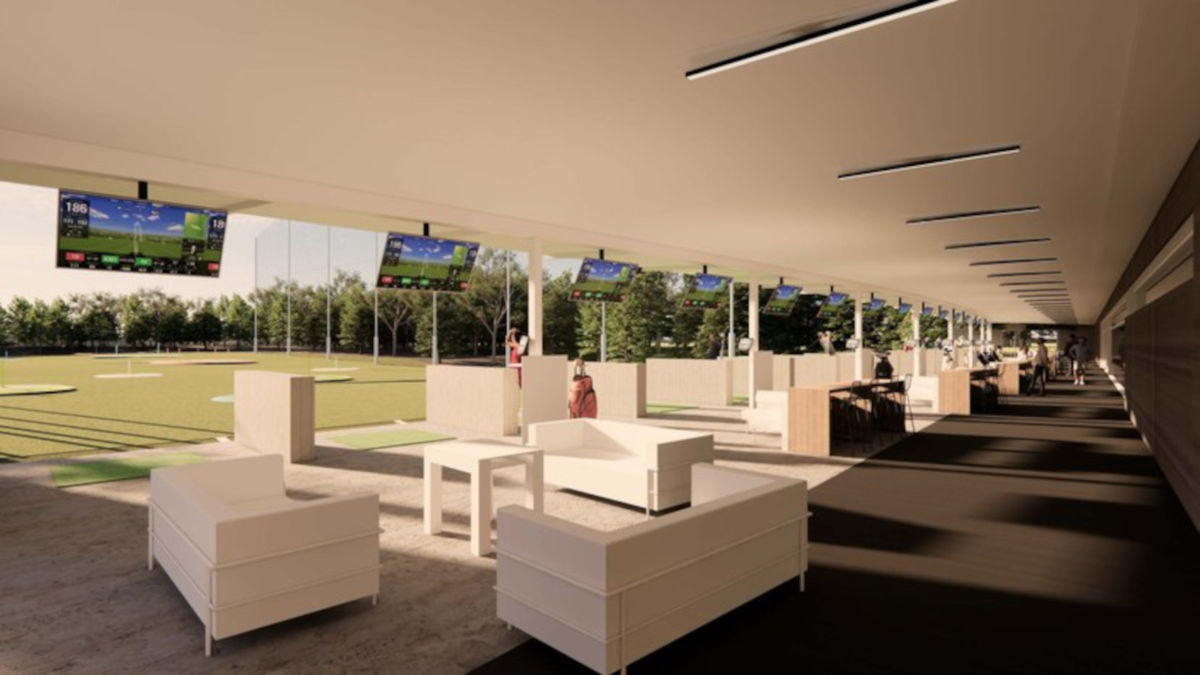
Could golf courses be the answer to some of Singapore’s development land needs?

While golf course land could play a part in Singapore’s future development, experts say there may be some constraints.
Ecologically responsible
The redevelopment of golf courses could address some of Singapore’s land demands, but there are urban planning considerations that need to be addressed while doing so, experts told CNA.
In a Parliamentary sitting on Feb 1, Members of Parliament Rachel Ong (PAP-West Coast) and Leon Perera (WP-Aljunied) both spoke about the need to preserve forests and how Singapore’s golf courses could factor in the equation.
In her speech, Ms Ong noted that forests have “accumulative benefits” of stabilising carbon emissions over time, and Singapore must consider its forests as a “last resort”.
Giving the example of the Clementi Forest and Ulu Pandan Forest, Ms Ong added that it would be “ecologically responsible” to consider utilising portions of the 1500 hectares across Singapore’s 17 golf courses, before reaching into the country’s forest land.
“While future generations can choose to rebuild golf courses, forests that are now removed will take decades to grow and the connected biodiversity that we lose now may never return,” she said.
In his speech, Mr Perera noted that the land leases of seven of the eight golf clubs which were slated to expire between 2021 and 2023 have been renewed “to some extent”.
“Given the importance of protecting pristine natural habitats like mature forests, can there not be more scope to review the land devoted to golf courses as a general planning parameter going forward, keeping in mind the fact that not everyone plays golf; the fact that there are available golfing options very close to Singapore; and the likelihood that golf is not a huge driver of inbound tourism,” said Mr Perera, pointing out that golf courses take up roughly 2 per cent of Singapore’s land area.
Speaking to CNA, Assistant Professor Perrine Hamel from Nanyang Technological University’s (NTU) Asian School of the Environment noted that the redevelopment of golf courses could be a way forward for Singapore.
“Golf courses occupy a small but not insignificant amount of space in our small island so they should be considered among the options for redevelopment,” she said.
“Golf courses also have environmental impacts such as high water use and water quality impairment – especially if best management practices for landscape maintenance are not observed. However, good landscape management … can alleviate these issues.”
300-400 hectares delisted
Dr Woo Jun Jie, who is a senior research fellow at National University of Singapore’s (NUS) Institute of Policy Studies, noted that the large plot sizes of golf courses present the Government with a possible option for addressing its development needs, and housing in particular.
“As Singapore continues to develop and the needs of its population grows, there may be a need to consider redeveloping more golf courses in order to serve the needs of the broader population, whether this is in terms of housing or publicly-accessible green spaces,” he said.
“Golf courses also require significant amounts of labour and resources to maintain … they do not necessarily contribute to environmental sustainability,” he added.
Singapore Nature Society vice-president Dr Ho Hua Chew said that while 300-400 hectares has been delisted, namely Keppel Golf Course, Jurong Country Club, Raffles Country Club and Marina Bay Golf Course, there is still a “sizeable area” of land being used for golf courses in Singapore. A “liberal estimate” would put the amount at over “1000-plus” hectares, about the same size as Pulau Ubin, he said.
“This is not an intensive land use compared to HDB housing and the leases for the golf courses are long. It’s a situation where talking about land scarcity here sounds rather hollow,” he said.
Dr Ho noted that for golf courses like Marina Bay, HDB housing or mixed housing should be considered aspart of redevelopment plans. Should there be pressure for more HDB housing, using golf course land should be used rather than clearing more forests, he added.
Speaking in Parliament last week, Minister for National Development Minister Desmond Lee had noted that the Government would have taken back more than 400ha of golf course land for redevelopment by 2030.
He pointed out that the land from Keppel Golf Course would be used to develop private and public housing. In addition, land from Jurong Country Club, Raffles Country Club, Marina Bay Golf Course (from 2024), and Orchid Country Club (from 2030) would be also used to meet “other needs”, Mr Lee said.
Providing Ecosystem Service
At the same time, Dr Hamel noted that golf courses can provide ecosystem services – benefits that people obtain from ecosystems – and support biodiversity.
“From that perspective, golf courses are more beneficial than most urban landscapes: they provide support (for) biodiversity by providing habitat for species, they help reduce temperatures by providing shade and evaporating water, and of course they represent an amenity for golfers and people enjoying the greenery,” she explained.
“By converting golf courses into residential areas, (we) would lose these benefits.”
The redevelopment of golf courses near to ecologically sensitive areas into residential areas could affect the environmental balance, she added.
“They are not as good as forests and natural landscapes … But they are often much better than residential areas,” Dr Hamel said. “Golf courses connecting areas of high biodiversity should be favored over those that do not connect biodiverse landscapes.”
Professor Sing Tien Foo, who is the director of the Institute of Real Estate and Urban Studies at NUS, noted that courses near Singapore’s Central Catchment Nature Reserve may not be suitable for redevelopment.
Courses in the vicinity include the Singapore Island Country Club’s Island and Bukit courses.
“Even if they don’t allow it for golf course use, I think it is also not feasible for other development, because that is actually protected,” he noted.
He noted that from the urban planning perspective, golf courses are sometimes planned in areas where development would otherwise be difficult. Giving the example of courses near airports, he explained that due to noise, residential development might not be ideal in such an area.
“You need to tie in the development properly, and to also take into consideration the surrounding environments,” he explained.
Eco-friendly golf course
NUS Associate Professor Yun Hye Hwang noted that golf courses can be renewed or retrofitted to better work as buffer zones between nature reserves and urban areas. This can be in the form of natural parks or eco-friendly golf courses, she noted.
“While some golf courses could be used for residential development, it is probably wiser to redevelop them into public parks so that their benefits reach larger portions of the population while using other options for residential areas,” added Dr Hamel.
Giving the example of Dover Forest, Dr Woo noted how it had grown from plantations and orchards, both of which are very heavily manicured and controlled spaces.
“Yet, Dover Forest is today home to a very diverse and self-sustaining natural ecosystem,” he pointed out.
While golf courses remain an option, It is also important to look at other alternatives in the push for redevelopment, stressed experts.
“It’s important to consider other redevelopment options – for example, old industrial sites or roads and carparks. Overall, those provide less environmental benefits and most of them less social benefits than golf courses,” said Dr Hamel.
Prof Hwang noted that there needs to be planning at the “city scale” of what Singapore needs.
“There may be some areas which can be redeveloped or developed immediately, because they have relatively less or lower ecological and biophysical impacts,” she said.
“We need to prioritise available lands through a systemic trade-off assessment by various aspects – ecological, environmental, economical, and socio-cultural benefits.”