Golf Ball Recycling: How to become an environmental champion
Across Australia and New Zealand, industries are being challenged to rethink how they consume resources, manage waste, and their environmental impact. It’s part of a big push worldwide to transition communities and industries towards a circular economy.
Golf, with its vast network of courses, facilities, machinery, products and supply chains, is uniquely positioned to become a leader in the transition toward a circular economy.
While the phrases “circularity” or “closing the loop” may be newer terms in the golf world, it presents an opportunity for you to join the larger discussion regarding the circular economy. Unlocking a circular economy can deliver billions of dollars in economic opportunities over the next two decades, while driving innovation, reducing waste, strengthening onshore manufacturing and creating millions of new green jobs.
The shift towards circularity stems from looking at the future state of our planet with its finite resources, and the billion tonnes of waste produced every year. All that waste has to end up somewhere.
What’s a circular economy?
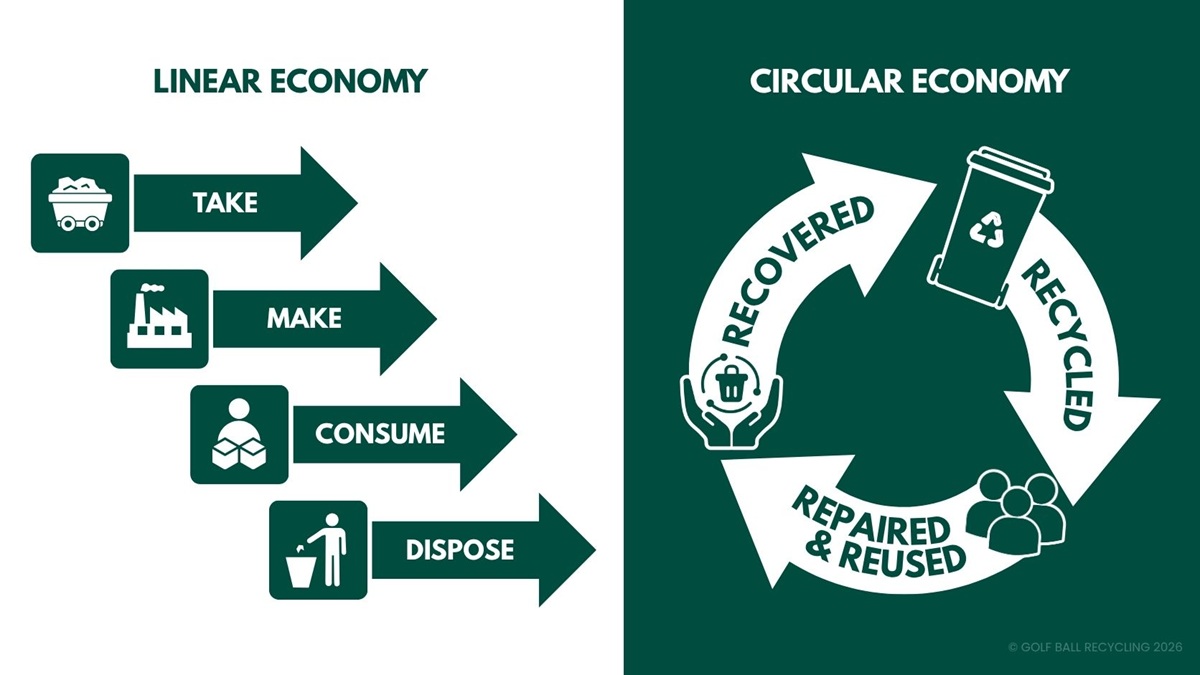
The traditional linear economy model is less of a circle and more of a straight line – materials are taken from the earth, made into something and then thrown away (also known as the take-make-dispose model).
With a circular model, materials are continuously circulated and repurposed in a closed-loop system, instead of being discarded. The focus is on designing out waste, keeping materials in use for as long as possible, and recovering valuable resources at the end of its life.
In golf, this includes everything from recycling golf balls, clubs and machinery, to improving procurement practices, reducing energy consumption, and transitioning courses towards more sustainable land management practices.
What does this have to do with golf?
There’s no denying how integral the environment is to the game of golf. Without it, the sport would cease to exist. Caring for the current and future state of the earth is inexplicitly the responsibility of all involved in golf – from golfers to coaches, superintendents to PGA pros, and even the food and beverage team that keeps your on-site restaurant running.
Golf courses, driving ranges, pro shops, equipment suppliers, machinery operators and manufacturers all have a role to play. Every reused golf ball, repurposed golf club and recycled machine component represents a reduction in waste and a step towards a lower-carbon future.
Perhaps most importantly, golf has influence. Millions of people engage with the sport every year, making it an ideal platform to inspire broader community awareness and behavioural change around sustainability.

Golf Circularity Group (GCG)
Golf Circularity Group believes golf can become one of the most visible and influential platforms for climate action. The organisation’s strategy is built around collaboration between industry, government and local communities. Achieving circularity cannot be done alone.
With a vision to develop a practical circular framework for the golf industry that reduces emissions, supports innovation and creates a collaborative pathway toward climate resilience, they ask a simple but powerful question: “What else can golf recycle?”
To support this vision, Golf Circularity Group has established four key strategic pillars:
- Supporting Circular Enterprises
Creating new employment opportunities across sustainability, recycling and circular manufacturing within golf and the wider sporting sector. Circular business models can stimulate local economies while reducing landfill and conserving resources.
- Turn Off the Lights
Encouraging golf businesses and industry ambassadors to lead by example in reducing energy use, lowering emissions and embedding climate-conscious operational practices into everyday activities.
- School on the Green
Delivering educational programs that teach future generations the importance of sustainability, circular procurement and environmental responsibility. Education remains one of the most powerful tools for long-term behavioural change.
- Golf is Greener
Supporting golf courses in transitioning away from synthetic dependency and toward more biological and regenerative land management practices that protect ecosystems, waterways and biodiversity.
Beyond these pillars, Golf Circularity Group is focused on practical outcomes that help businesses measure and improve their environmental performance. This includes:
- reducing golf’s CO₂ emissions while lowering operational costs.
- identifying strategic partnerships that support circular enterprises.
- delivering CPD upskilling in Environmental, Occupational Health and Safety.
- providing Circular Procurement Framework training and certification.
- engaging with Indigenous councils to strengthen understanding of native land and sea stewardship.
- encouraging corporate participation in sustainability initiatives.
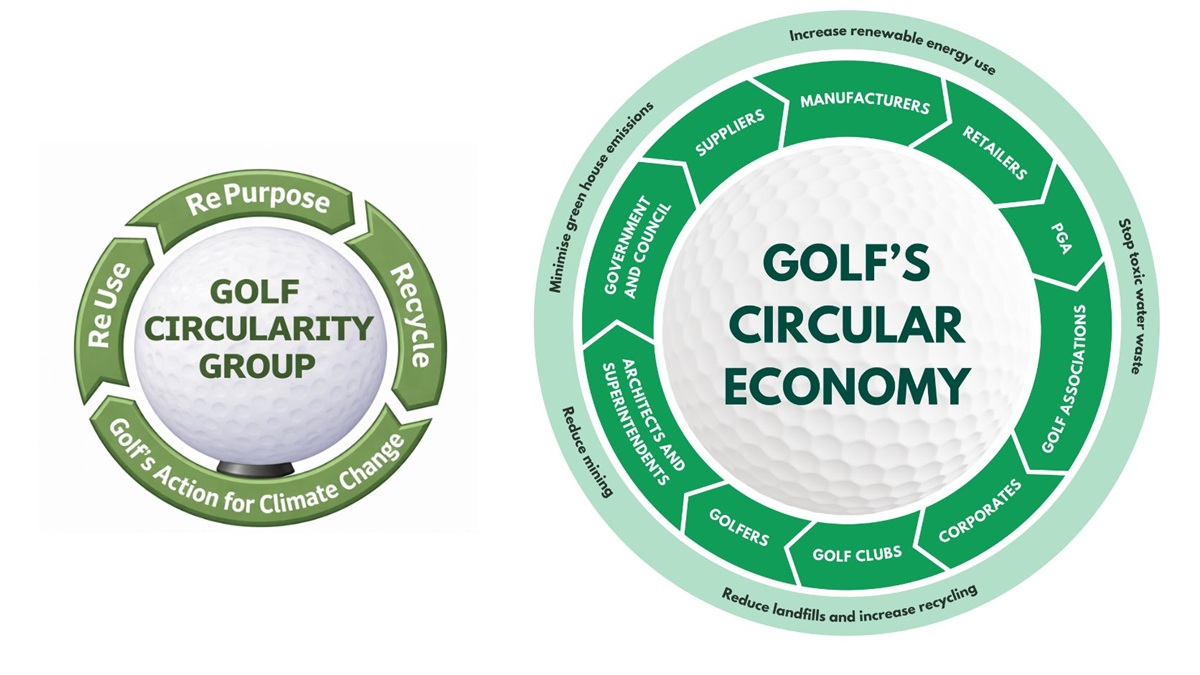
A major challenge facing many organisations is understanding where they currently sit on the circularity journey. Golf Circularity Group works directly with businesses to assess critical questions:
- Do you have a circular procurement policy?
- How are you measuring your carbon footprint?
- Do you know how much of your waste and products end up in landfill?
- Are you prepared to collaborate in industry working groups focused on reducing golf’s environmental impact?
- Do you have knowledge and understanding of government funding available to you?
These conversations are essential because the transition to circularity is environmental, economic, operational and cultural.
With industry participation, government support, and continued collaboration, golf has an opportunity to become a leading example of how circular economy principles create environmental, social and economic value for future generations.
Next Steps
Golf Circularity Group invites you to consider a circular model as a way of doing business and to share in the benefits it presents to the next generation of golfers.
Step 1: To get started, first engage with Golf Ball Recycling (GBR) – an easy lead-in to circularity by keeping end-of-life balls out of landfills. GBR is Australia and New Zealand’s largest and first full-cycle golf ball recycling company, helping drive profits back to your business while keeping good balls in use for as long as possible.
For more information, contact sales@golfballrecycling.site.
Step 2: Book a complimentary half-hour information session with Golf Circularity Group. Contact info@golfcircularity.com to discuss your circular project needs, including:
- Environmental Course Management
- Circular Procurement Management
- Circular Financial Auditing
- Impact Reporting Certificates, provided at the end of each financial year to efficiently qualify your emissions savings.
Step 3: Schedule a two-hour online Lunch and Learn, Circular Procurement introduction.
Step 4: Develop a Circular Procurement Framework for your business.
Step 5: Schedule a two-hour online Environmental Course Management introductory session.
Step 6: Register for on-site training and Circular Financial Auditing.
About Golf Circularity Group
Golf Circularity Group is a network of industry leaders and innovative changemakers, interested to learn what businesses are doing to reduce their carbon footprint, and assist in protecting the environment. Rolling out circularity across all sports industries and businesses can only be possible with government and industry support.
To learn more, visit golfcircularity.com.
About Golf Ball Recycling
Golf Ball Recycling is Australia and New Zealand’s largest, and first, full-cycle golf ball recycling company. We provide waste management solutions for golf companies and collaborate with local councils, and innovative companies, to transform shredded golf balls and close the circular loop.
For more information, visit golfballrecycling.com.au.
Related News:
Golf Ball Recycling: Where Do All The Golf Balls Go?